Oh Canada! Toronto, Vancouver and Victoria Where Detached Garden Suites and Secondary Suites (aka Accessory Dwelling Units) Are a Key Plank of Local "Gentle Density" Strategies

Canada.
Eh, let me tell you something, Canada's major cities are onto something brilliant, and it's about time we talked about it. From Toronto's garden suites to Vancouver's laneway houses and Victoria's pioneering policies, accessory dwelling units (ADUs) have become the maple leaf in the crown of Canadian housing strategy. It's not just about cramming more people into neighbourhoods, it's about doing it the Canadian way: thoughtfully, sustainably, and with respect for existing communities.
If you've been wondering how to navigate this brave new world of gentle density in Toronto, Vancouver, or Victoria, you're in for a treat. And if you're considering adding an ADU to your property, well, let me introduce you to why MOMO by LuxMod might just be your best bet, eh?
The Great Canadian Housing Challenge
Let's not beat around the bush here, Canada's got a housing crisis that would make even the politest Canuck raise their voice above an indoor whisper. With average home prices in Toronto hitting the stratosphere and Vancouver's market making millionaires out of folks who bought in the '90s, something had to give. Well here comes the gentle density revolution.
Rather than bulldozing established neighbourhoods for towers or sprawling endlessly into the Greenbelt (sorry, Ontario developers, not happening), Canadian cities have embraced what planners call "gentle density", adding housing incrementally within existing neighbourhoods without dramatically altering their character. And the star of this show? The humble ADU, whether it's called a garden suite, laneway house, or secondary suite.
Toronto's Garden Suite Revolution
Right, so Toronto finally got with the program in February 2022 when City Council gave the green light to garden suites across residential properties. This was huge, folks. Prior to this, only properties backing onto public laneways could build detached secondary units (cleverly called "laneway suites"). Now, pretty much any residential property with enough space can build a garden suite in the backyard.
The Official Plan and Zoning Bylaw amendments for garden suites allow for the construction of an additional residential unit on residential properties that are not located on a public lane, which opened up tens of thousands of properties across the city. We're talking about a massive expansion of housing potential without changing the streetscape one bit.
Garden suites are often a way to create homes for family members, parents, grandparents or adult children, or can be used as rental housing units. Whether you're housing your aging parents, providing a place for your adult kids who can't afford the Toronto market, or creating rental income to help with that mortgage, garden suites are the Swiss Army knife of housing solutions.
Toronto's approach emphasizes flexibility while maintaining neighbourhood character. These aren't massive structures that dominate backyards, they're modest, well-designed additions that integrate sensitively into existing residential areas.
Vancouver: The OG of Laneway Living
Now, if we're talking about Canadian ADU pioneers, we've got to tip our toque to Vancouver. Way back in 2009, while the rest of us were still figuring out our iPhones, Vancouver introduced laneway houses as part of their EcoDensity Initiative. This wasn't just some housing policy; it was a comprehensive approach to accommodating population growth without sprawling into the mountains, ocean, or our American neighbours to the south.
The city created the EcoDensity Initiative and relaxed regulations to encourage the construction of laneway houses with the intention of increasing density and creating alternative housing options in an unaffordable housing market. And boy, did it work. By 2017, Vancouver had approved over 2,900 laneway units, more ADUs than any other North American city at that time!
What makes Vancouver's approach special is the flexibility built into the program. A laneway house is allowed in addition to a secondary suite in the main house and there is no requirement for owner occupancy. This means you can have up to three housing units on a single-family lot: the main house, a secondary suite (like a basement apartment), and a detached laneway house. That's gentle density at its finest, eh?
The beauty of Vancouver's laneway houses is they don't change the street-facing character of neighbourhoods. They're tucked away behind the main structure, accessed via the lane, preserving the look and feel of residential streets while dramatically increasing housing supply. It's the Canadian compromise, everyone gets what they need without stepping on anyone's toes.
In 2023, Vancouver took things even further with sweeping zoning changes that now allow multiplexes on former single-family lots. But laneway houses remain a cornerstone of the city's gentle density strategy, proving that sometimes the best solutions are the modest ones that respect what's already there.
Victoria: Garden Suites with West Coast Flair
Victoria, British Columbia, Canada's garden city, has embraced garden suites with characteristic West Coast enthusiasm. In Victoria, a detached ADU is called a "garden suite": a legal, detached, ground-oriented suite in the backyard of a single-family home. These are designed specifically for long-term rental housing and can't be strata-titled or used for short-term rentals like Airbnb.
Victoria's approach is particularly permissive. Detached ADUs are permitted as-of-right in several zones, including R1-A, R1-B, R1-G, R-2, R-J, and R-K, while attached ADUs, such as secondary suites, are also allowed in single-family detached houses within these zones. This "as-of-right" designation is key, it means homeowners don't need to go through a lengthy rezoning process. If your property meets the requirements, you're good to go.
The city's zoning is impressively flexible, allowing for the construction of multiplexes, corner townhouses, and heritage-conserving infill housing in traditional residential areas, which allows development of up to six homes on an average residential lot. Now that's what I call making room for everyone at the table!
Victoria's regulations are thoughtfully designed too. No additional parking is required for garden suites; however, the primary dwelling must have at least one parking stall, which cannot be in the front yard. This balances the need to add housing with practical considerations about neighbourhood traffic and parking.
Why MOMO by LuxMod Is the Smart Choice for Canadian ADUs
So you're sold on the idea of adding an ADU to your property, good on ya! But here's where many Canadian homeowners hit a wall. Traditional construction is slow, weather-dependent (and let's be honest, Canadian weather is not always cooperative), and fraught with the kind of cost overruns that make you long for the days when Timmies coffee was under a loonie.
Enter MOMO by LuxMod, and suddenly the whole process makes sense again.
Engineered for Canadian Conditions
Let's talk about what really matters up here, can it handle a proper Canadian winter? MOMO's panelized ADU models are engineered to meet or exceed Miami-Dade hurricane standards AND heavy mountain snow loads. That means whether you're facing Toronto ice storms, Vancouver's endless rain, or Victoria's surprise snow days, your MOMO ADU is built to thrive.
The cold-formed steel framing isn't just strong, it's fire, mold, and pest resistant. No worries about carpenter ants in Vancouver, no concerns about rot from Toronto's humid summers, and no problems with Victoria's occasional dampness. It's built to last generations, not just seasons.
Precision Manufacturing Beats Canadian Weather
Here's a funny thing about building in Canada, we've got about six months of decent construction weather, and contractors are booked solid for all of them. Traditional site-built ADUs can drag on for 12-18 months because of weather delays, subcontractor scheduling, and the general chaos of on-site construction.
MOMO manufactures everything in a controlled factory environment. Your ADU components are precision-engineered and protected from the elements until they're delivered to your site. Once the foundation is ready, the structure goes up in days, not months. No waiting for the ground to thaw, no weather delays, no excuses. Just efficient, predictable construction that respects both your timeline and your budget.
Site-Specific Engineering for Canadian Jurisdictions
Every municipality has different requirements, Toronto's garden suite regulations differ from Vancouver's laneway house rules, and Victoria's got its own approach. MOMO provides site-specific stamped structural plans engineered for your exact property, local climate zone, and building code requirements.
Your general contractor receives professionally engineered documentation ready for permit submission. While MOMO doesn't handle the permitting process directly, they provide your builder with the critical plans needed to navigate approval efficiently. Whether you're dealing with Toronto's building department, Vancouver's development permit process, or Victoria's delegated development permits, you're starting with solid, code-compliant plans.
Models Perfectly Sized for Canadian ADU Regulations
MOMO's ADU lineup aligns beautifully with Canadian gentle density regulations:
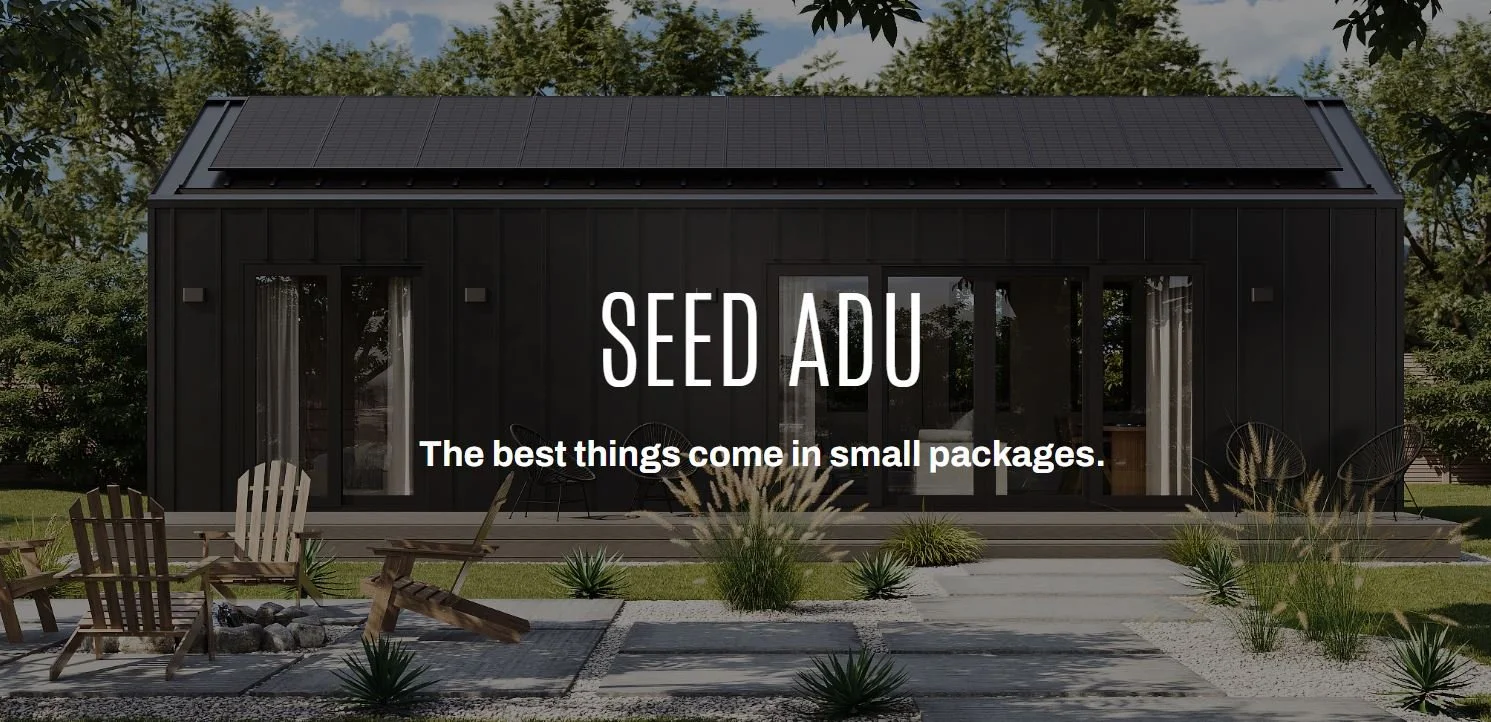
Seed Studio (428 sq ft): Perfect for compact Toronto garden suites or Vancouver laneway houses where lot size is tight but you still want quality living space.
Seed (622 sq ft | 1BR/1BA): The sweet spot for most Canadian ADU applications. Large enough for comfortable year-round living, small enough to meet most municipal size limits.
Umbra (755 sq ft | 1BR/1BA): Ideal for Victoria's generous garden suite allowances or larger Toronto properties where you want enhanced livability.
Seed XL (910 sq ft | 2BR/2BA): Perfect for multigenerational living situations—house your parents or adult kids with genuine privacy and comfort.
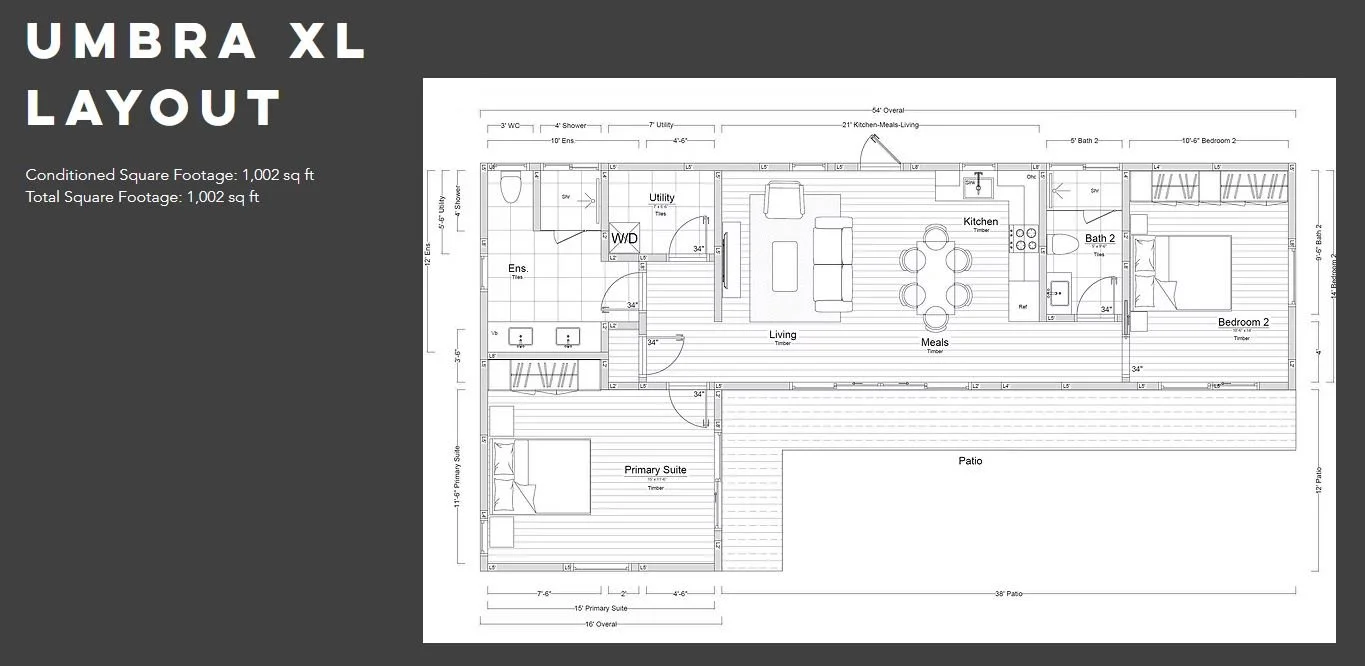
Umbra XL (1,002 sq ft | 2BR/2BA): The ultimate in detached secondary suites, offering nearly 1,000 square feet of thoughtfully designed space without exceeding typical municipal maximums.
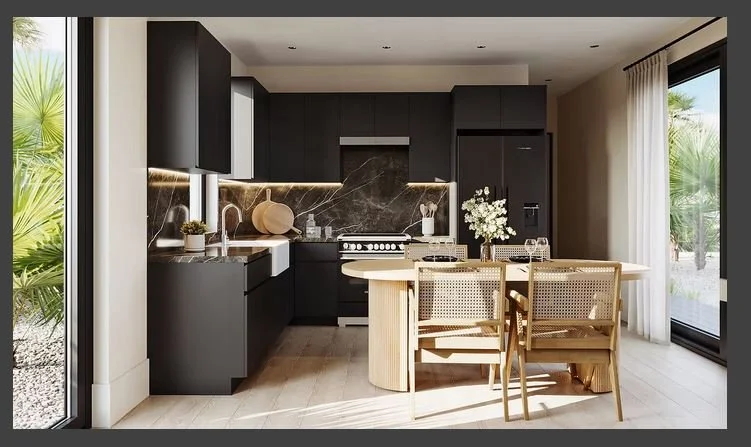
Umbra Kitchen
All models feature single-level designs that work beautifully as garden suites or laneway houses, with layouts that maximize livability in compact footprints, exactly what regulations encourage.
Luxury That Makes Sense in Cold Climates
MOMO's standard features aren't just luxurious, they're practical for Canadian living:
High-efficiency heat pump systems provide whisper-quiet heating and cooling with dramatically lower energy consumption (crucial when heating bills run six months a year).
Radiant floor heating in bathrooms means stepping onto warm floors even in February.
Superior insulation and air sealing from factory construction ensures consistent comfort and low energy costs.
Wall-mounted towel warmers that make winter mornings more bearable.
Solid wood cabinetry and premium finishes that stand up to daily use.
These aren't Southern California features awkwardly transplanted north, these are thoughtful selections that enhance Canadian living.
Transparent Pricing
Nobody likes surprises when it comes to budgets, especially when you're already dealing with Canadian construction costs. MOMO provides transparent kit pricing upfront. You know what you're investing before breaking ground, without the change orders and cost overruns that plague traditional construction.
This predictability is crucial when you're financing an ADU addition or calculating rental income potential. Whether you're accessing home equity to fund construction or working with a construction mortgage, knowing your costs from day one makes planning straightforward.
Installation Support for Your Builder
Your general contractor or builder receives comprehensive installation assistance from MOMO. This includes detailed assembly instructions, technical specifications, and responsive support for any questions during construction. Canadian builders appreciate working with a system that's been engineered for efficiency, no figuring things out on the fly or making costly mistakes.
The panelized approach means even smaller local builders can handle MOMO installations without needing specialized crews or equipment. A simple scissor lift is all that's required, no massive cranes, no road closures, and more importatnly no neighbourhood disruptions.
Sustainability That Matters
Canadians care about environmental impact, and MOMO delivers. The factory-controlled construction process minimizes waste compared to traditional site-built construction. The superior energy efficiency means lower ongoing carbon emissions. And every home is solar-ready, allowing you to add renewable energy when it makes sense.
Optional sustainability packages with solar panels, battery storage, and EV charging integrate seamlessly, letting you create a net-zero or near-net-zero ADU that reduces your environmental footprint while cutting utility costs.
The Gentle Density Advantage: Why ADUs Work
The genius of Toronto's garden suites, Vancouver's laneway houses, and Victoria's garden suite policies is they achieve density without disruption. Streets look the same. Traffic doesn't change dramatically. The neighbourhood character, that intangible quality Canadians value, remains intact. But housing supply increases, multigenerational living becomes possible, and homeowners gain financial flexibility.
It's incremental, it's thoughtful, and it's distinctly Canadian. We're not tearing down and starting over, we're working with what we have and making it better. That's the essence of gentle density.
ADUs also address something rarely discussed in housing policy but deeply important in Canadian cities, aging in place. When you can build a garden suite for your parents, they can stay close to family while maintaining independence. When your adult kids struggle with housing costs (and let's face it, they're struggling), you can provide them a proper home rather than a basement couch.
Real-World Benefits Canadians Are Seeing
The data from these three cities tells an encouraging story. Toronto approved garden suites in 2022 and has seen steady uptake as homeowners recognize the potential. Vancouver's laneway house program has consistently produced hundreds of new rental units annually since 2009, adding thousands of homes without changing neighbourhood character. Victoria's permissive approach has made garden suites a standard consideration for homeowners with suitable properties.
Homeowners report multiple benefits:
Rental income that helps with mortgages in expensive markets (Vancouver laneway houses can fetch $1,500-$2,500 monthly).
Increased property values from the additional dwelling unit.
Multigenerational living that keeps families connected.
Aging in place for elderly parents who need proximity but want independence.
Flexible workspace for the remote work era (hello, home office that's actually separate from home!)
The gentle density approach also benefits communities. Instead of pushing development to distant suburbs (increasing commute times and infrastructure costs), housing is added where services, transit, and jobs already exist. It's efficient urbanism at its finest.
Getting Started with Your Canadian ADU
Right, so you're ready to jump on the gentle density bandwagon and add an ADU to your property. Smart move! Here's what you need to know:
1. Check Your Property Eligibility: Each city has specific requirements about lot size, setbacks, and existing structures. Toronto, Vancouver, and Victoria all have online resources and staff who can help you determine if your property qualifies.
2. Understand the Regulations: Toronto's garden suite rules differ from Vancouver's laneway house requirements and Victoria's garden suite policies. Familiarize yourself with height limits, size maximums, parking requirements, and design guidelines for your municipality.
3. Work with Experienced Professionals: Partner with a general contractor or builder who understands local ADU regulations and has experience with panelized construction. The right builder makes the entire process smoother.
4. Consider MOMO by LuxMod: With MOMO's panelized ADU models, you get precision engineering, Canadian-appropriate construction, site-specific plans, and quality that lasts. The factory-controlled manufacturing eliminates weather delays and quality inconsistencies, while the luxury finishes ensure your ADU adds genuine value to your property.
5. Plan Your Finances: Whether you're using home equity, a construction mortgage, or personal savings, know your budget upfront. MOMO's transparent pricing eliminates surprises, but you'll also need to account for site preparation, foundation work, utility connections, and landscaping.
6. Think Long-Term: ADUs are long-term investments. Will you rent it out? House family? Use it as a home office? Your intended use affects design choices and finish selections. MOMO's customization options let you create a space that serves your specific needs without overwhelming you with decisions.
Ready to Take the Next Step?
Canada's gentle density revolution isn't slowing down, it's accelerating. Provincial governments are pushing municipalities to make ADUs easier to approve, housing advocates are championing incremental density, and homeowners are recognizing the financial and social benefits of adding secondary suites to their properties.
If you're considering a garden suite in Toronto, a laneway house in Vancouver, or a garden suite in Victoria, MOMO by LuxMod offers the quality, efficiency, and Canadian-appropriate engineering to make your project successful.
Their panelized construction approach delivers precisely what Canadian homeowners need: fast installation that works around our weather, superior durability for our climate, energy efficiency for our heating costs, and luxury finishes that create spaces people genuinely want to live in.
Get Your Free Quote Today
Ready to explore how a MOMO ADU could transform your property and contribute to gentle density in your neighbourhood? Get your free, no-obligation quote from www.theaduwizard.com and start your journey toward creating additional housing, generating rental income, or accommodating family on your property.
The ADU Wizard team understands Canadian regulations, works with MOMO by LuxMod's precision-engineered models, and can guide you through the entire process from initial concept to completed construction. Whether you're in Toronto, Vancouver, Victoria, or anywhere else MOMO serves, expert guidance is just a click away.
Canada's housing future is gentle density. It's backyard suites and laneway houses and garden suites that add homes without changing neighbourhoods. It's multigenerational living and rental income and aging in place. And it's available to you, right now, on your property.
Let's build some gentle density, eh? Your neighbourhood, and your bank account, will thank you.
This article is for informational purposes. ADU regulations vary by municipality across Canada. Always verify local requirements and work with licensed contractors before proceeding with any accessory dwelling unit project.

Bob and Doug say “Get a MOMO by LuxMod ya hoser.”