Oh Canada! Toronto, Vancouver and Victoria Where Detached Garden Suites and Secondary Suites (aka Accessory Dwelling Units) Are a Key Plank of Local "Gentle Density" Strategies

Canada.
Eh, let me tell you something, Canada's major cities are onto something brilliant, and it's about time we talked about it. From Toronto's garden suites to Vancouver's laneway houses and Victoria's pioneering policies, accessory dwelling units (ADUs) have become the maple leaf in the crown of Canadian housing strategy. It's not just about cramming more people into neighbourhoods, it's about doing it the Canadian way: thoughtfully, sustainably, and with respect for existing communities.
If you've been wondering how to navigate this brave new world of gentle density in Toronto, Vancouver, or Victoria, you're in for a treat. And if you're considering adding an ADU to your property, well, let me introduce you to why MOMO by LuxMod might just be your best bet, eh?
The Great Canadian Housing Challenge
Let's not beat around the bush here, Canada's got a housing crisis that would make even the politest Canuck raise their voice above an indoor whisper. With average home prices in Toronto hitting the stratosphere and Vancouver's market making millionaires out of folks who bought in the '90s, something had to give. Well here comes the gentle density revolution.
Rather than bulldozing established neighbourhoods for towers or sprawling endlessly into the Greenbelt (sorry, Ontario developers, not happening), Canadian cities have embraced what planners call "gentle density", adding housing incrementally within existing neighbourhoods without dramatically altering their character. And the star of this show? The humble ADU, whether it's called a garden suite, laneway house, or secondary suite.
Toronto's Garden Suite Revolution
Right, so Toronto finally got with the program in February 2022 when City Council gave the green light to garden suites across residential properties. This was huge, folks. Prior to this, only properties backing onto public laneways could build detached secondary units (cleverly called "laneway suites"). Now, pretty much any residential property with enough space can build a garden suite in the backyard.
The Official Plan and Zoning Bylaw amendments for garden suites allow for the construction of an additional residential unit on residential properties that are not located on a public lane, which opened up tens of thousands of properties across the city. We're talking about a massive expansion of housing potential without changing the streetscape one bit.
Garden suites are often a way to create homes for family members, parents, grandparents or adult children, or can be used as rental housing units. Whether you're housing your aging parents, providing a place for your adult kids who can't afford the Toronto market, or creating rental income to help with that mortgage, garden suites are the Swiss Army knife of housing solutions.
Toronto's approach emphasizes flexibility while maintaining neighbourhood character. These aren't massive structures that dominate backyards, they're modest, well-designed additions that integrate sensitively into existing residential areas.
Vancouver: The OG of Laneway Living
Now, if we're talking about Canadian ADU pioneers, we've got to tip our toque to Vancouver. Way back in 2009, while the rest of us were still figuring out our iPhones, Vancouver introduced laneway houses as part of their EcoDensity Initiative. This wasn't just some housing policy; it was a comprehensive approach to accommodating population growth without sprawling into the mountains, ocean, or our American neighbours to the south.
The city created the EcoDensity Initiative and relaxed regulations to encourage the construction of laneway houses with the intention of increasing density and creating alternative housing options in an unaffordable housing market. And boy, did it work. By 2017, Vancouver had approved over 2,900 laneway units, more ADUs than any other North American city at that time!
What makes Vancouver's approach special is the flexibility built into the program. A laneway house is allowed in addition to a secondary suite in the main house and there is no requirement for owner occupancy. This means you can have up to three housing units on a single-family lot: the main house, a secondary suite (like a basement apartment), and a detached laneway house. That's gentle density at its finest, eh?
The beauty of Vancouver's laneway houses is they don't change the street-facing character of neighbourhoods. They're tucked away behind the main structure, accessed via the lane, preserving the look and feel of residential streets while dramatically increasing housing supply. It's the Canadian compromise, everyone gets what they need without stepping on anyone's toes.
In 2023, Vancouver took things even further with sweeping zoning changes that now allow multiplexes on former single-family lots. But laneway houses remain a cornerstone of the city's gentle density strategy, proving that sometimes the best solutions are the modest ones that respect what's already there.
Victoria: Garden Suites with West Coast Flair
Victoria, British Columbia, Canada's garden city, has embraced garden suites with characteristic West Coast enthusiasm. In Victoria, a detached ADU is called a "garden suite": a legal, detached, ground-oriented suite in the backyard of a single-family home. These are designed specifically for long-term rental housing and can't be strata-titled or used for short-term rentals like Airbnb.
Victoria's approach is particularly permissive. Detached ADUs are permitted as-of-right in several zones, including R1-A, R1-B, R1-G, R-2, R-J, and R-K, while attached ADUs, such as secondary suites, are also allowed in single-family detached houses within these zones. This "as-of-right" designation is key, it means homeowners don't need to go through a lengthy rezoning process. If your property meets the requirements, you're good to go.
The city's zoning is impressively flexible, allowing for the construction of multiplexes, corner townhouses, and heritage-conserving infill housing in traditional residential areas, which allows development of up to six homes on an average residential lot. Now that's what I call making room for everyone at the table!
Victoria's regulations are thoughtfully designed too. No additional parking is required for garden suites; however, the primary dwelling must have at least one parking stall, which cannot be in the front yard. This balances the need to add housing with practical considerations about neighbourhood traffic and parking.
Why MOMO by LuxMod Is the Smart Choice for Canadian ADUs
So you're sold on the idea of adding an ADU to your property, good on ya! But here's where many Canadian homeowners hit a wall. Traditional construction is slow, weather-dependent (and let's be honest, Canadian weather is not always cooperative), and fraught with the kind of cost overruns that make you long for the days when Timmies coffee was under a loonie.
Enter MOMO by LuxMod, and suddenly the whole process makes sense again.
Engineered for Canadian Conditions
Let's talk about what really matters up here, can it handle a proper Canadian winter? MOMO's panelized ADU models are engineered to meet or exceed Miami-Dade hurricane standards AND heavy mountain snow loads. That means whether you're facing Toronto ice storms, Vancouver's endless rain, or Victoria's surprise snow days, your MOMO ADU is built to thrive.
The cold-formed steel framing isn't just strong, it's fire, mold, and pest resistant. No worries about carpenter ants in Vancouver, no concerns about rot from Toronto's humid summers, and no problems with Victoria's occasional dampness. It's built to last generations, not just seasons.
Precision Manufacturing Beats Canadian Weather
Here's a funny thing about building in Canada, we've got about six months of decent construction weather, and contractors are booked solid for all of them. Traditional site-built ADUs can drag on for 12-18 months because of weather delays, subcontractor scheduling, and the general chaos of on-site construction.
MOMO manufactures everything in a controlled factory environment. Your ADU components are precision-engineered and protected from the elements until they're delivered to your site. Once the foundation is ready, the structure goes up in days, not months. No waiting for the ground to thaw, no weather delays, no excuses. Just efficient, predictable construction that respects both your timeline and your budget.
Site-Specific Engineering for Canadian Jurisdictions
Every municipality has different requirements, Toronto's garden suite regulations differ from Vancouver's laneway house rules, and Victoria's got its own approach. MOMO provides site-specific stamped structural plans engineered for your exact property, local climate zone, and building code requirements.
Your general contractor receives professionally engineered documentation ready for permit submission. While MOMO doesn't handle the permitting process directly, they provide your builder with the critical plans needed to navigate approval efficiently. Whether you're dealing with Toronto's building department, Vancouver's development permit process, or Victoria's delegated development permits, you're starting with solid, code-compliant plans.
Models Perfectly Sized for Canadian ADU Regulations
MOMO's ADU lineup aligns beautifully with Canadian gentle density regulations:
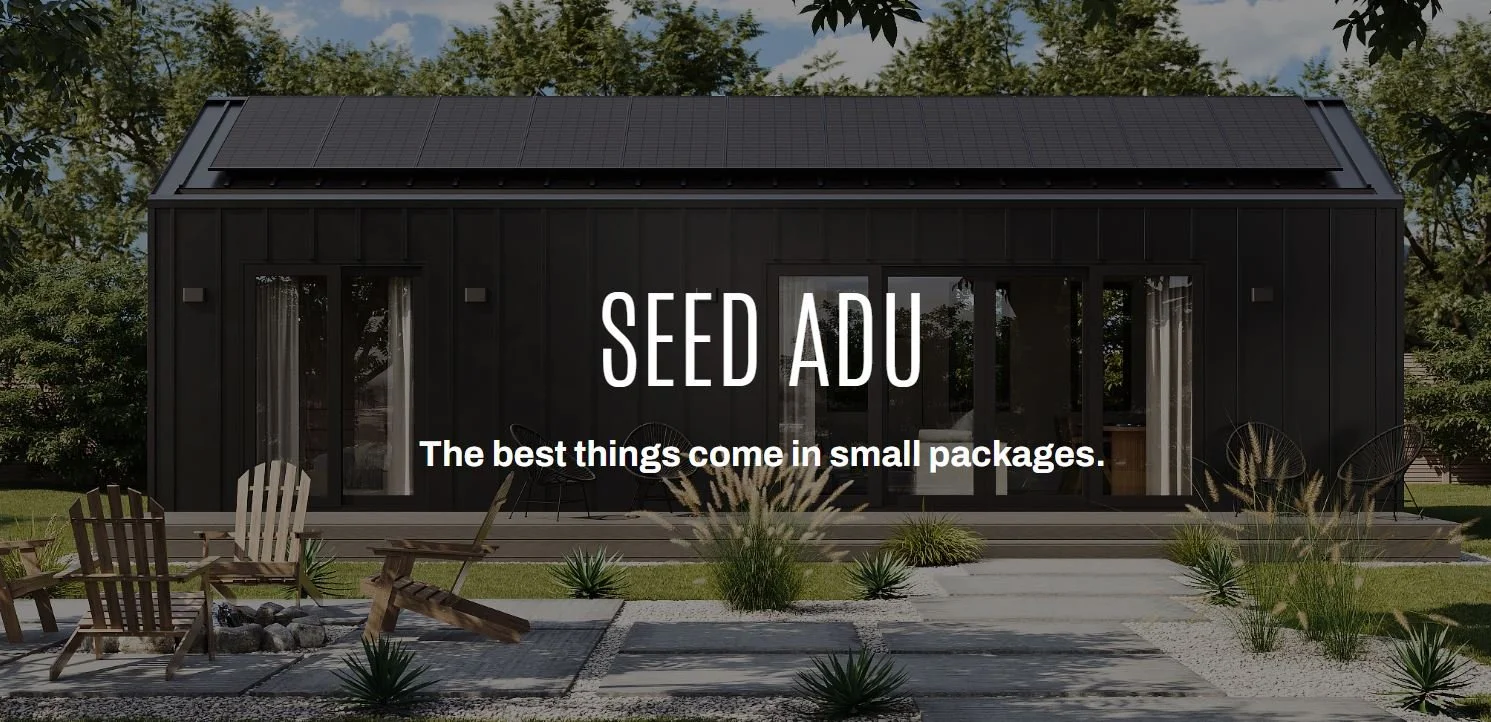
Seed Studio (428 sq ft): Perfect for compact Toronto garden suites or Vancouver laneway houses where lot size is tight but you still want quality living space.
Seed (622 sq ft | 1BR/1BA): The sweet spot for most Canadian ADU applications. Large enough for comfortable year-round living, small enough to meet most municipal size limits.
Umbra (755 sq ft | 1BR/1BA): Ideal for Victoria's generous garden suite allowances or larger Toronto properties where you want enhanced livability.
Seed XL (910 sq ft | 2BR/2BA): Perfect for multigenerational living situations—house your parents or adult kids with genuine privacy and comfort.
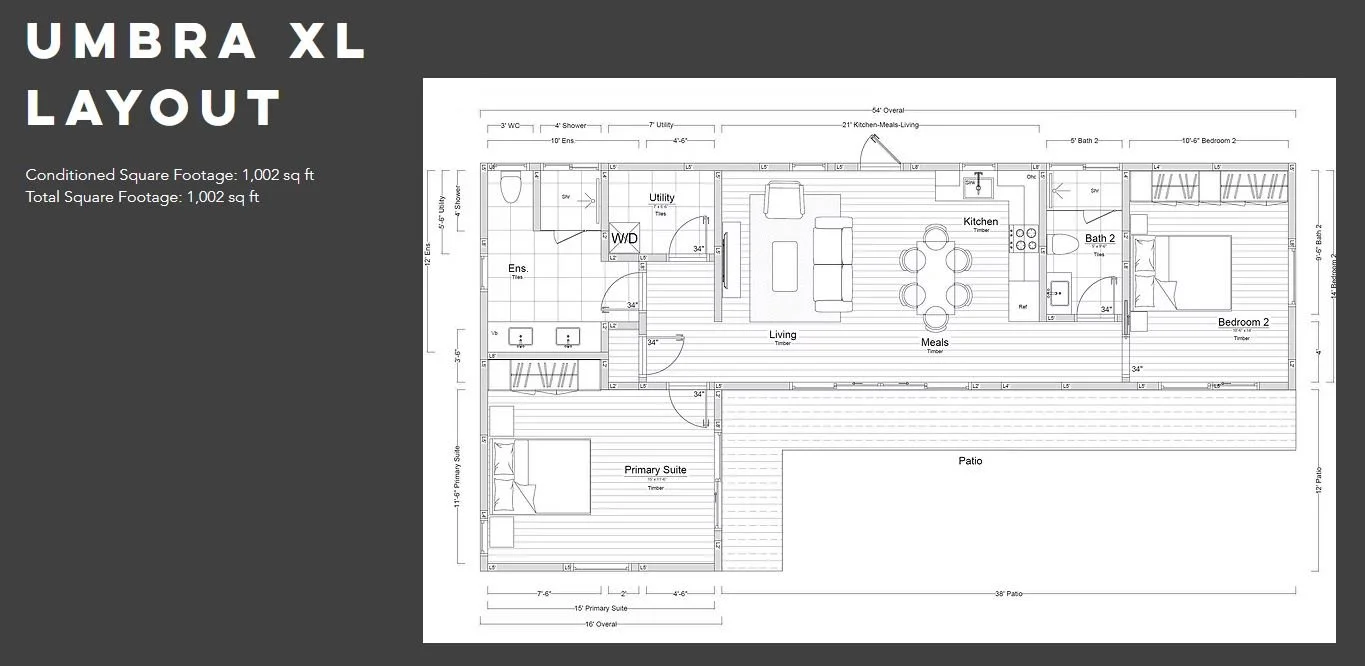
Umbra XL (1,002 sq ft | 2BR/2BA): The ultimate in detached secondary suites, offering nearly 1,000 square feet of thoughtfully designed space without exceeding typical municipal maximums.
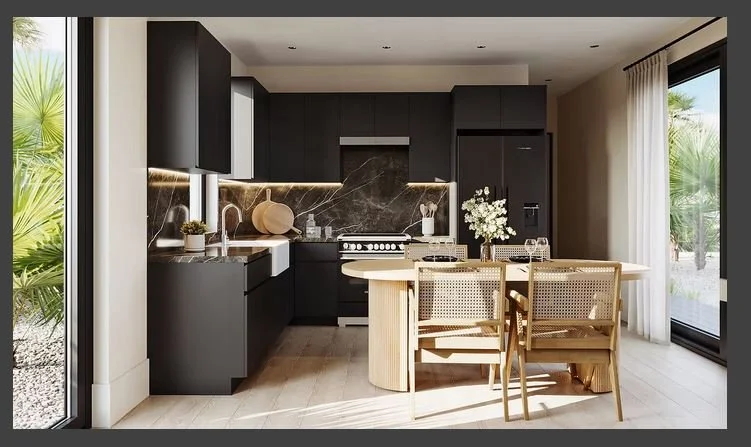
Umbra Kitchen
All models feature single-level designs that work beautifully as garden suites or laneway houses, with layouts that maximize livability in compact footprints, exactly what regulations encourage.
Luxury That Makes Sense in Cold Climates
MOMO's standard features aren't just luxurious, they're practical for Canadian living:
High-efficiency heat pump systems provide whisper-quiet heating and cooling with dramatically lower energy consumption (crucial when heating bills run six months a year).
Radiant floor heating in bathrooms means stepping onto warm floors even in February.
Superior insulation and air sealing from factory construction ensures consistent comfort and low energy costs.
Wall-mounted towel warmers that make winter mornings more bearable.
Solid wood cabinetry and premium finishes that stand up to daily use.
These aren't Southern California features awkwardly transplanted north, these are thoughtful selections that enhance Canadian living.
Transparent Pricing
Nobody likes surprises when it comes to budgets, especially when you're already dealing with Canadian construction costs. MOMO provides transparent kit pricing upfront. You know what you're investing before breaking ground, without the change orders and cost overruns that plague traditional construction.
This predictability is crucial when you're financing an ADU addition or calculating rental income potential. Whether you're accessing home equity to fund construction or working with a construction mortgage, knowing your costs from day one makes planning straightforward.
Installation Support for Your Builder
Your general contractor or builder receives comprehensive installation assistance from MOMO. This includes detailed assembly instructions, technical specifications, and responsive support for any questions during construction. Canadian builders appreciate working with a system that's been engineered for efficiency, no figuring things out on the fly or making costly mistakes.
The panelized approach means even smaller local builders can handle MOMO installations without needing specialized crews or equipment. A simple scissor lift is all that's required, no massive cranes, no road closures, and more importatnly no neighbourhood disruptions.
Sustainability That Matters
Canadians care about environmental impact, and MOMO delivers. The factory-controlled construction process minimizes waste compared to traditional site-built construction. The superior energy efficiency means lower ongoing carbon emissions. And every home is solar-ready, allowing you to add renewable energy when it makes sense.
Optional sustainability packages with solar panels, battery storage, and EV charging integrate seamlessly, letting you create a net-zero or near-net-zero ADU that reduces your environmental footprint while cutting utility costs.
The Gentle Density Advantage: Why ADUs Work
The genius of Toronto's garden suites, Vancouver's laneway houses, and Victoria's garden suite policies is they achieve density without disruption. Streets look the same. Traffic doesn't change dramatically. The neighbourhood character, that intangible quality Canadians value, remains intact. But housing supply increases, multigenerational living becomes possible, and homeowners gain financial flexibility.
It's incremental, it's thoughtful, and it's distinctly Canadian. We're not tearing down and starting over, we're working with what we have and making it better. That's the essence of gentle density.
ADUs also address something rarely discussed in housing policy but deeply important in Canadian cities, aging in place. When you can build a garden suite for your parents, they can stay close to family while maintaining independence. When your adult kids struggle with housing costs (and let's face it, they're struggling), you can provide them a proper home rather than a basement couch.
Real-World Benefits Canadians Are Seeing
The data from these three cities tells an encouraging story. Toronto approved garden suites in 2022 and has seen steady uptake as homeowners recognize the potential. Vancouver's laneway house program has consistently produced hundreds of new rental units annually since 2009, adding thousands of homes without changing neighbourhood character. Victoria's permissive approach has made garden suites a standard consideration for homeowners with suitable properties.
Homeowners report multiple benefits:
Rental income that helps with mortgages in expensive markets (Vancouver laneway houses can fetch $1,500-$2,500 monthly).
Increased property values from the additional dwelling unit.
Multigenerational living that keeps families connected.
Aging in place for elderly parents who need proximity but want independence.
Flexible workspace for the remote work era (hello, home office that's actually separate from home!)
The gentle density approach also benefits communities. Instead of pushing development to distant suburbs (increasing commute times and infrastructure costs), housing is added where services, transit, and jobs already exist. It's efficient urbanism at its finest.
Getting Started with Your Canadian ADU
Right, so you're ready to jump on the gentle density bandwagon and add an ADU to your property. Smart move! Here's what you need to know:
1. Check Your Property Eligibility: Each city has specific requirements about lot size, setbacks, and existing structures. Toronto, Vancouver, and Victoria all have online resources and staff who can help you determine if your property qualifies.
2. Understand the Regulations: Toronto's garden suite rules differ from Vancouver's laneway house requirements and Victoria's garden suite policies. Familiarize yourself with height limits, size maximums, parking requirements, and design guidelines for your municipality.
3. Work with Experienced Professionals: Partner with a general contractor or builder who understands local ADU regulations and has experience with panelized construction. The right builder makes the entire process smoother.
4. Consider MOMO by LuxMod: With MOMO's panelized ADU models, you get precision engineering, Canadian-appropriate construction, site-specific plans, and quality that lasts. The factory-controlled manufacturing eliminates weather delays and quality inconsistencies, while the luxury finishes ensure your ADU adds genuine value to your property.
5. Plan Your Finances: Whether you're using home equity, a construction mortgage, or personal savings, know your budget upfront. MOMO's transparent pricing eliminates surprises, but you'll also need to account for site preparation, foundation work, utility connections, and landscaping.
6. Think Long-Term: ADUs are long-term investments. Will you rent it out? House family? Use it as a home office? Your intended use affects design choices and finish selections. MOMO's customization options let you create a space that serves your specific needs without overwhelming you with decisions.
Ready to Take the Next Step?
Canada's gentle density revolution isn't slowing down, it's accelerating. Provincial governments are pushing municipalities to make ADUs easier to approve, housing advocates are championing incremental density, and homeowners are recognizing the financial and social benefits of adding secondary suites to their properties.
If you're considering a garden suite in Toronto, a laneway house in Vancouver, or a garden suite in Victoria, MOMO by LuxMod offers the quality, efficiency, and Canadian-appropriate engineering to make your project successful.
Their panelized construction approach delivers precisely what Canadian homeowners need: fast installation that works around our weather, superior durability for our climate, energy efficiency for our heating costs, and luxury finishes that create spaces people genuinely want to live in.
Get Your Free Quote Today
Ready to explore how a MOMO ADU could transform your property and contribute to gentle density in your neighbourhood? Get your free, no-obligation quote from www.theaduwizard.com and start your journey toward creating additional housing, generating rental income, or accommodating family on your property.
The ADU Wizard team understands Canadian regulations, works with MOMO by LuxMod's precision-engineered models, and can guide you through the entire process from initial concept to completed construction. Whether you're in Toronto, Vancouver, Victoria, or anywhere else MOMO serves, expert guidance is just a click away.
Canada's housing future is gentle density. It's backyard suites and laneway houses and garden suites that add homes without changing neighbourhoods. It's multigenerational living and rental income and aging in place. And it's available to you, right now, on your property.
Let's build some gentle density, eh? Your neighbourhood, and your bank account, will thank you.
This article is for informational purposes. ADU regulations vary by municipality across Canada. Always verify local requirements and work with licensed contractors before proceeding with any accessory dwelling unit project.

Bob and Doug say “Get a MOMO by LuxMod ya hoser.”
Which Brands Offer Pre-Fabricated Casitas with Modern Designs?
The casita, that charming Spanish-inspired backyard dwelling, has evolved dramatically from its Southwest architectural roots. Today's modern casitas blend the romantic appeal of traditional design with cutting-edge construction technology, creating flexible living spaces that serve as everything from guest quarters to rental income generators. But which brands are actually delivering on the promise of beautiful, functional, pre-fabricated casitas with contemporary design?
The challenge isn't finding companies that claim to offer modern casitas, it's finding manufacturers that deliver genuine quality, thoughtful design, and construction excellence without the complexity and delays of traditional building. Many so-called "modern" casitas still rely on outdated methods, while others sacrifice design quality for speed or cut corners on materials to hit lower price points.
What Defines a Modern Pre-Fabricated Casita?
Before exploring specific brands, it's worth understanding what separates exceptional modern casitas from mediocre options. The best pre-fabricated casitas offer:
Contemporary architectural design that respects casita heritage while embracing modern aesthetics.
Precision manufacturing that ensures consistent quality and faster installation.
Premium materials that provide durability and long-term value.
Smart floor plans that maximize livability in compact footprints.
Customization flexibility without the overwhelming complexity of full custom builds.
Energy efficiency that reduces ongoing operating costs.
Complete packages including finishes, fixtures, and appliances.
The Modern Casita Leader: MOMO by LuxMod
When it comes to pre-fabricated casitas that deliver exceptional modern design, MOMO by LuxMod stands alone in the North American market. Their panelized ADU models represent the evolution of the casita concept, taking the flexible, guest-friendly spirit of traditional casitas and reimagining them with precision engineering, luxury finishes, and contemporary architecture.
A Casita Collection for Every Need
MOMO offers a thoughtfully curated range of ADU models that function beautifully as modern casitas, each designed to serve different property layouts and lifestyle needs:
Seed ADU.
Seed Studio (428 sq ft)
The smallest offering provides a refined studio casita perfect for properties with limited space. Despite its compact footprint, the Seed Studio delivers a complete living experience with full bathroom and thoughtful layout. Ideal for home offices, art studios, or minimalist guest quarters.
Seed (622 sq ft | 1BR/1BA)
The original Seed model elevates the studio concept with a separate bedroom, making it perfect as a traditional casita for visiting family or as a private rental unit. The single-level design respects casita traditions while incorporating thoroughly modern aesthetics and finishes.
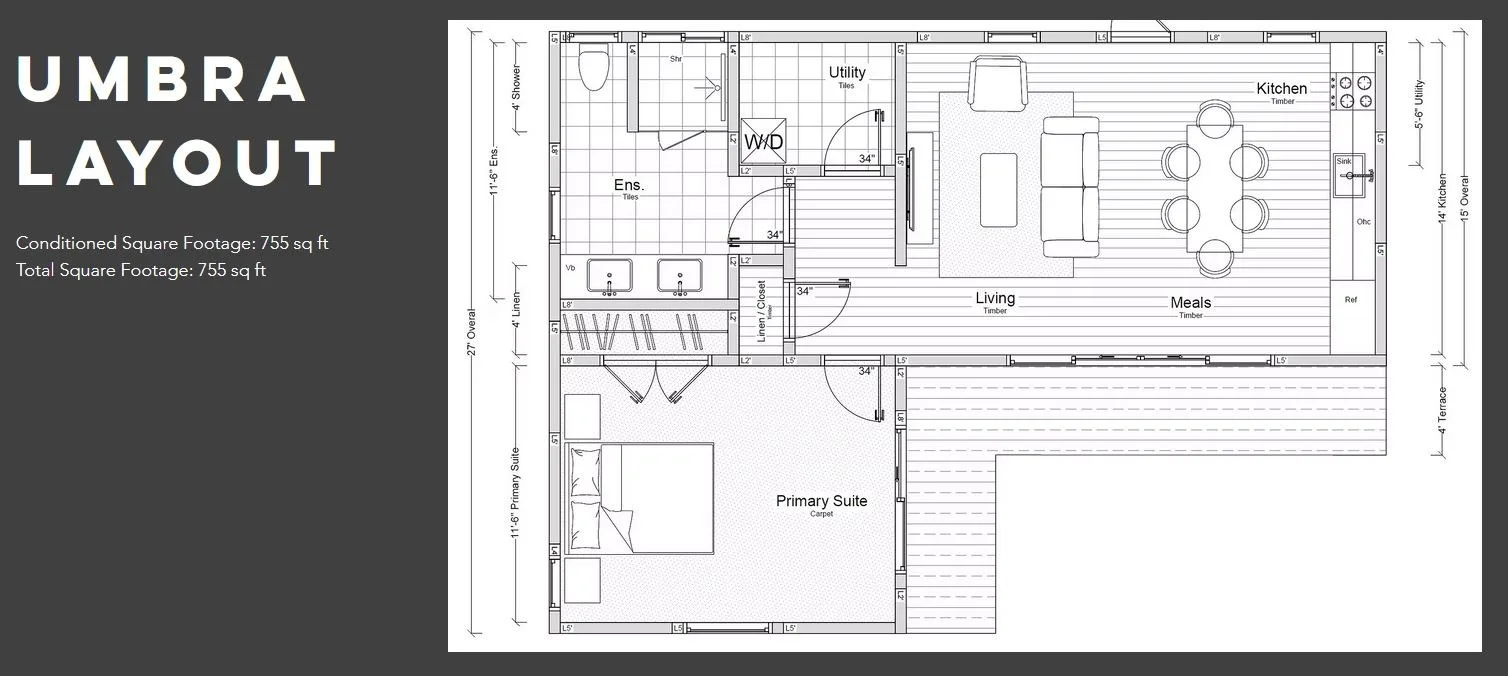
Umbra ADU floorplan,
Umbra (755 sq ft | 1BR/1BA)
With additional square footage over the Seed, the Umbra provides enhanced living space and a more generous bedroom. This model strikes the perfect balance between compact efficiency and comfortable living, the sweet spot for many modern casita applications.
Seed XL (910 sq ft | 2BR/2BA)
For those needing to accommodate multiple guests or create a more substantial rental unit, the Seed XL adds a second bedroom and bathroom while maintaining the efficient single-level layout that characterizes the best casita designs.
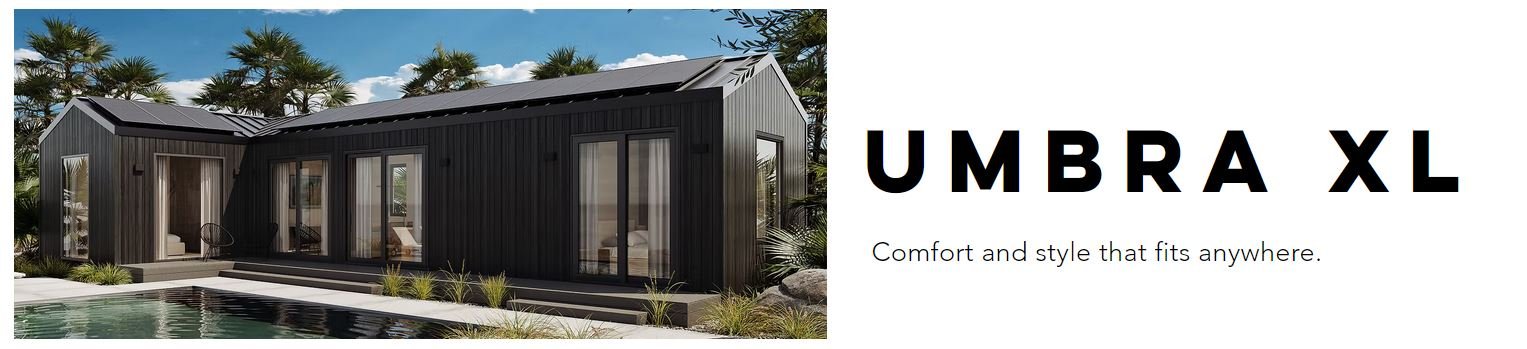
Umbra XL
Umbra XL (1,002 sq ft | 2BR/2BA)
The largest of MOMO's dedicated casita-scale models, the Umbra XL delivers 1,002 square feet of carefully planned living space with two full bathrooms. This configuration works beautifully for multigenerational living situations or as a high-end rental property.
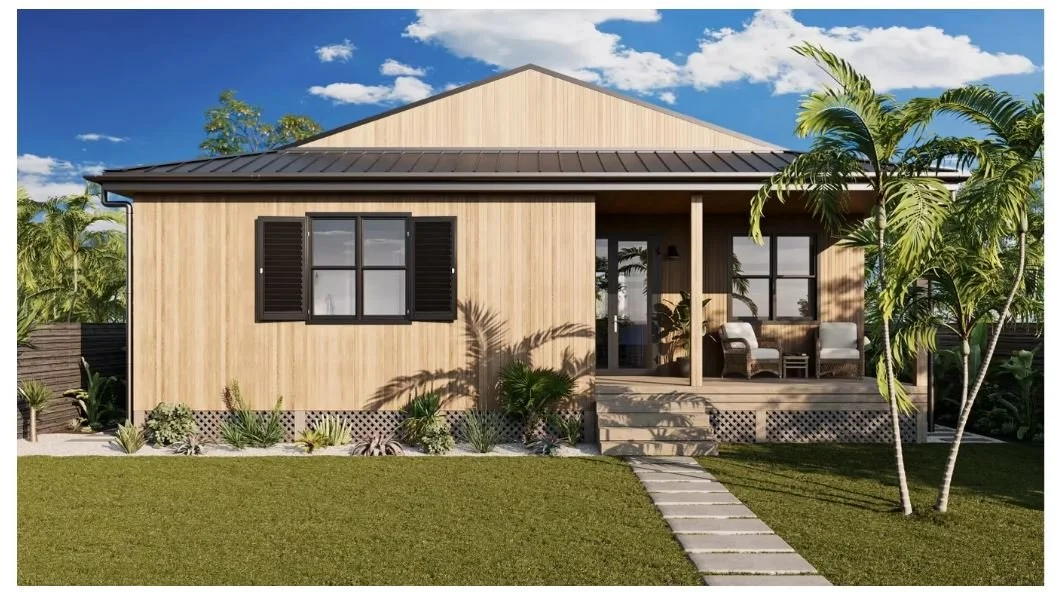
Otium model.
Otium Bungalow (1,318 sq ft | 2BR/2BA)
While technically beyond traditional casita dimensions, the Otium Bungalow represents the ultimate expression of the modern casita concept, a fully independent dwelling with generous proportions and luxury throughout.
PSST – all of these would make great tiny homes also!
Design Excellence That Honors Casita Heritage
What makes MOMO's ADUs exceptional as modern casitas isn't just their dimensions, it's their design philosophy. Each model features:
Contemporary Exteriors: Clean lines, thoughtfully proportioned windows, and modern material palettes that complement existing properties without mimicking them. The designs feel fresh and current while respecting the independent, guest-oriented spirit of traditional casitas.
Curated Customization: MOMO offers meaningful choices in exterior finishes, cabinetry styles, tile selections, and accent materials. You can personalize your casita to reflect regional aesthetics, Southwest warmth, California contemporary, Pacific Northwest modern, without getting lost in endless decisions.
Light-Filled Interiors: Generous windows and thoughtful orientation flood MOMO casitas with natural light, creating spaces that feel significantly larger than their square footage suggests. This attention to light quality directly references the best traditional casitas while employing modern fenestration technology.
Functional Floor Plans: Every MOMO model maximizes livability through intelligent space planning. Kitchens flow naturally into living areas, bedrooms provide genuine privacy, and bathrooms feel spa-like despite compact dimensions. No space is wasted, but nothing feels cramped.
Super Superior Construction for Lasting Value
MOMO's panelized construction methodology delivers what traditional casita construction often cannot, absolute consistency and superior durability. Every component is precision-manufactured in a controlled factory environment, then delivered as a complete kit ready for efficient assembly.
The construction advantages include:
Cold-Formed Steel Framing: Unlike wood-framed structures, MOMO's steel framing resists fire, mold, pests, and rot. Your casita will look as good in 30 years as it does on installation day.
Engineered for Extremes: Each structure is engineered to meet or exceed Miami-Dade hurricane standards and heavy snow loads. Whether your property is in Arizona sun, Pacific Northwest rain, or Rocky Mountain snow, your MOMO casita is built to thrive.
Premium Exterior Materials: Steel roofs with 25-year warranties, colored-through fiber cement siding, and commercial-grade aluminum windows ensure your casita maintains its beauty with minimal maintenance.
Factory Quality Control: Because MOMO manufactures in controlled conditions, quality never varies due to weather, rushed schedules, or inconsistent trades. What you specify is exactly what you receive.
Luxury Standard Features
The most striking difference between MOMO casitas and competitors becomes apparent when you examine what's included as standard:
Solid wood cabinetry with soft-close drawers and under-cabinet lighting.
BOSCH stainless steel appliance packages that bring European quality to every casita.
Soaking tubs and radiant floor heating in bathrooms for spa-like comfort.
Wall-mounted towel warmers that add daily luxury.
Fully aluminum doors and windows with thermal breaks for energy efficiency.
Solid interior doors rather than hollow-core compromises.
Custom closet built-ins that maximize storage.
Premium fixtures throughout that elevate the entire experience.
These aren't upgrades you pay extra for, they're standard features that position MOMO casitas in a different category entirely from budget prefab options.
Energy Performance and Sustainability
Modern casitas should enhance your property value without inflating your utility costs. MOMO's approach to energy efficiency goes far beyond code minimums:
High-efficiency heat pump systems provide whisper-quiet heating and cooling with dramatically lower energy consumption.
Superior insulation and air sealing from factory construction ensures consistent comfort.
Solar-ready design allows you to add renewable energy when it makes sense (Perfect for the SW).
Optional sustainability packages with solar panels, battery storage, and EV charging.
Smart SPAN electrical panels for controlling your energy systems from your phone.
The result is a casita that costs far less to operate than conventionally built structures while providing superior comfort year-round.
Tri-National Capability
Unlike regional competitors, MOMO operates seamlessly across the United States, Canada, and Mexico. This continental reach means they understand diverse building codes, climate requirements, and regional aesthetics. Whether you're creating a modern casita in Tucson, Toronto, or Todos Santos, MOMO brings localized expertise to your project.
Site-Specific Engineering
Every MOMO casita includes professionally stamped structural plans customized for your specific property, local climate zone, and building codes. Your general contractor receives engineering documentation ready for permit submission, eliminating one of the biggest challenges in casita development. While MOMO doesn't handle permitting directly, they provide your builder with the critical documentation needed to navigate approvals efficiently.
Installation Support for Your Builder
MOMO provides comprehensive installation assistance to help your general contractor complete your casita project successfully. This includes detailed assembly instructions, technical specifications, and responsive support for any questions during construction. Your builder isn't left figuring things out alone, they have access to MOMO's factory expertise throughout the installation process.
The Timeline Advantage
Traditional casita construction typically requires 8-12 months from concept to completion. MOMO's panelized approach dramatically accelerates this timeline. Once site preparation is complete, the structural assembly happens in days rather than months. Total project timelines are typically reduced by 40-60%, crucial if you're adding rental income or housing family with time-sensitive needs.
Transparent Pricing
One of MOMO's most appreciated features is pricing transparency. You'll know your casita kit investment upfront, without the surprise costs and change orders that plague traditional construction. This predictability makes financial planning straightforward and helps you maximize your return on investment from day one.
Why MOMO Casitas Outperform Traditional Alternatives
Understanding how MOMO's modern casitas compare to traditional construction and other prefab options clarifies their value proposition:
Design Quality: While many prefab options offer functional layouts, MOMO delivers thoughtful architecture with genuine aesthetic appeal. The difference is immediately apparent, these are spaces people want to spend time in, not just tolerate.
Material Standards: Budget prefab casitas typically use economy-grade materials that age poorly. MOMO specifies premium materials throughout, ensuring your casita adds lasting value to your property rather than becoming a maintenance burden.
Customization Approach: Most prefab companies offer either no customization or overwhelming choice. MOMO's curated customization hits the sweet spot, enough options to make your casita personal without decision fatigue.
Construction Technology: Traditional casita builders still rely on on-site construction with all its weather delays and quality inconsistencies. MOMO's factory construction eliminates these variables while delivering superior precision.
Energy Performance: Conventional casitas often barely meet code minimums. MOMO's factory-controlled construction ensures consistent insulation and air sealing, plus high-efficiency systems that dramatically reduce operating costs.
Speed to Completion: Traditional builds take months of on-site work. MOMO's panelized approach allows structural assembly in days once site preparation is complete.
Long-Term Durability: Wood-framed casitas face ongoing threats from moisture, pests, and fire. MOMO's steel framing and premium materials provide decades of worry-free performance.
Making Your Modern Casita Decision
Choosing a pre-fabricated casita manufacturer is about more than comparing square footage and initial costs. Consider:
Design authenticity: Does the aesthetic actually deliver on "modern" or is it just generic?
Material quality: Are premium materials standard or optional upgrades?
Manufacturing precision: Is construction controlled or weather-dependent?
Energy performance: Will you pay premium utility costs for years?
Builder support: What resources will your contractor receive?
Geographic capability: Can they serve your location effectively?
Long-term value: Will the casita add lasting equity or require constant maintenance?
The Bottom Line
The modern casita market has expanded dramatically, but few manufacturers deliver the combination of design excellence, construction quality, and value that MOMO by LuxMod provides. Their panelized ADU models reimagine the casita concept for the 21st century, honoring the flexible, guest-oriented spirit of traditional designs while employing advanced manufacturing, premium materials, and contemporary architecture.
Whether you're creating a guest retreat for visiting family, establishing a private space for adult children, generating rental income, or developing a home office sanctuary, MOMO delivers modern casitas that enhance your property from day one. The factory-controlled manufacturing eliminates the variables that plague traditional construction, while the luxury finishes and thoughtful design ensure your casita becomes a genuine asset rather than an afterthought.
For homeowners seeking pre-fabricated casitas with authentic modern design, MOMO by LuxMod represents the current standard for quality and value in North America. Your builder will appreciate the precision engineering and installation support, while you'll love living with the results.
Ready to explore how a MOMO modern casita could transform your property in Texas or Arizona? Visit www.momobyluxmod.com to view their complete ADU lineup, explore customization options, and connect with their team. They can walk you through site-specific considerations and help you understand exactly what your modern casita will deliver.
This article is for informational purposes. Casita and ADU regulations vary by jurisdiction—always verify local requirements and work with licensed contractors before proceeding with any backyard dwelling project.
What Are the Best Companies for Turnkey Accessory Dwelling Units?
The accessory dwelling unit (ADU) market has exploded in recent years as homeowners across North America seek smart solutions to housing shortages, multigenerational living needs, and property value enhancement. But with so many companies entering the space, finding the right ADU solution, one that delivers quality construction with streamlined processes, can feel overwhelming.
If you're exploring ADU options (Casita, Garden Suite, Secondary Suite, Granny Flat, Carriage house, backyard cottage, mother in law suite, or a tiny home), you've likely discovered that what companies promise doesn't always match what they deliver. Understanding what separates truly exceptional ADU manufacturers from the rest becomes crucial.
What Makes an ADU Solution Worth Your Investment?
Before diving into specific companies, it's worth understanding what you should expect from a quality ADU manufacturer. The best companies offer:
Complete panelized kits that arrive with all structural components, finishes, and fixtures.
Engineered stamped plans customized for your specific property and local building codes.
Installation support that helps your general contractor or builder complete assembly efficiently.
Quality construction using durable, modern materials and precision manufacturing.
Customization options that let you create a space suited to your specific needs and aesthetic preferences.
Transparent pricing without hidden costs that derail your budget.
North American reach for clients throughout the United States, Canada, and Mexico.
Leading the Market: MOMO by LuxMod
When it comes to panelized ADU solutions that deliver exceptional value, MOMO by LuxMod has established itself as the premier choice across North America. Here's why discerning homeowners, builders, and developers are choosing MOMO by LuxMod for their ADU (or Casita, Garden Suite, Secondary Suite, Granny Flat, Carriage house, backyard cottage, mother in law suite, or a tiny home) projects.
Precision-Engineered Panelized Construction
MOMO doesn't build traditional prefab boxes, they manufacture precision-engineered panelized home kits. Every component, from wall panels to roof trusses, is fabricated in a controlled factory environment to exact specifications. This approach delivers construction quality and consistency that's nearly impossible with traditional on-site building. Weather delays, material theft, and workmanship variability are eliminated before your kit even arrives at the job site.
Your general contractor receives a complete kit with all structural elements, luxury finishes, premium appliances, and detailed assembly instructions. The panelized system allows builders to erect the structure in days rather than months, dramatically reducing labor costs and construction timelines.
Site-Specific Engineered Plans
One of MOMO's most valuable features is their provision of stamped structural drawings tailored to your exact property, climate zone, and local code requirements. Your GC receives professionally engineered plans ready for permit submission, eliminating one of the biggest headaches in the ADU process. While MOMO doesn't handle permitting directly, they provide your builder with the critical documentation needed to navigate the approval process efficiently.
Installation Assistance That Empowers Your Builder
MOMO provides comprehensive installation support to help your general contractor or builder complete the project successfully. This includes detailed assembly instructions, technical specifications, and responsive support for any questions that arise during construction. Your builder isn't left to figure things out alone, they have access to MOMO's expertise throughout the installation process.
Tri-National Capabilities
Unlike competitors that limit their services to specific regions, MOMO operates seamlessly across the United States, Canada, and Mexico. This tri-national presence means they understand the unique regulatory environments, climate considerations, and building codes across diverse jurisdictions. Whether you're in California, British Columbia, or Baja, MOMO brings localized expertise to your project through their engineered plans and shipping.
Design Excellence Without Compromise
MOMO's model lineup offers something many ADU providers can't: genuine luxury within a streamlined process. Their units range from compact studios like the Seed ADU (428 to 922sq ft) to spacious configurations like the Umbra XL (1,002sq ft), all featuring contemporary design aesthetics that complement rather than clash with existing properties.
High-quality finishes set MOMO apart from budget competitors:
Solid wood cabinetry with under-cabinet lighting.
Soaking tubs and radiant bathroom floors.
Wall-mounted towel warmers.
Fully aluminum doors and windows.
BOSCH stainless steel appliance packages.
Solid interior doors.
Custom closet built-ins.
These aren't upgrades, they're standard features that elevate your ADU from functional to exceptional.
Built to Last: Superior Materials and Engineering
MOMO's construction methodology delivers durability that traditional builds struggle to match. Their cold-formed steel framing is fire, mold, and pest resistant. The structures are engineered to meet or exceed Miami-Dade hurricane standards and heavy mountain snow loads, providing confidence regardless of your climate.
Additional durability features include:
Steel roofs with 25-year manufacturer warranty on paint finish.
Fully colored-through fiber cement siding.
Heavy-gauge aluminum windows with thermal break efficiency.
Adaptive hybrid foundation system that reduces installation time from weeks to days.
Energy Efficiency and Sustainability
Modern ADUs should enhance your property value without inflating your utility bills. MOMO units are engineered for superior energy efficiency with high-efficiency heat pump systems for heating and cooling. Their optional sustainability packages include optional solar panels, battery banks, and electric car chargers with Smart SPAN panels that let you control your electrical and solar systems from your phone.
Every home is solar-ready, allowing you to add renewable energy when it makes sense for your situation.
Transparent, Predictable Pricing
One of MOMO's most appreciated features is pricing transparency. You'll know your kit investment upfront, without the surprise costs that often accompany traditional construction. This predictability makes financial planning straightforward and helps you maximize your return on investment from day one.
Speed Without Cutting Corners
Traditional ADU construction can take 12-18 months from concept to completion. MOMO's streamlined manufacturing and panelized approach dramatically reduces this timeline without sacrificing quality. The structure can go vertical in days once site preparation is complete, crucial if you're adding rental income or housing a family member with time-sensitive needs.
Curated Customization
MOMO offers the sweet spot between cookie-cutter and overwhelming custom options. Their curated customization approach lets you personalize exterior finishes, cabinetry styles, tile, fixtures, and accent materials without the complexity and decision fatigue of a full custom build. You get enough choice to make the space your own without getting lost in endless options.
Traditional ADU Building vs. MOMO Panelized Kits: A Clear Comparison
Understanding how MOMO's approach differs from traditional ADU construction helps clarify the value proposition:
Construction Timeline
Traditional Build: 12-18 months from design to completion, with weather delays and subcontractor scheduling causing frequent extensions.
MOMO: Structure erected in days once site is prepared; total project timeline reduced by 40-60%.
Quality Control
Traditional Build: Quality varies based on individual trades; weather exposure during construction can damage materials.
MOMO: Factory-controlled environment ensures consistent precision; materials protected until installation; no weather-related degradation.
Labor Requirements
Traditional Build: Requires coordinating multiple specialized subcontractors over many months.
MOMO: Reduced labor needs; small teams with scissor lifts (no crane required) can complete structural assembly.
Cost Predictability
Traditional Build: Material price volatility and change orders commonly add 15-30% to original estimates MOMO: Fixed kit pricing protects against material cost fluctuations; transparent pricing from the start
Engineering Documentation
Traditional Build: Architects and engineers charge separately for plans; coordination delays common.
MOMO: Site-specific stamped plans included; engineered for your property and local codes.
Material Quality
Traditional Build: Varies widely based on budget and contractor choices; often compromised to meet bids MOMO: Premium materials standard, including cold-formed steel framing, aluminum windows, BOSCH appliances, and luxury finishes
Permitting Support
Traditional Build: Homeowner or GC navigates permitting with architect-provided plans.
MOMO: Stamped structural drawings provided specifically for permit submission.
Foundation Installation
Traditional Build: Traditional concrete foundations take weeks to cure.
MOMO: Adaptive hybrid foundation system or Surefoot footings install in days instead of weeks.
Weather Dependency
Traditional Build: Heavy weather dependence throughout framing, roofing, and exterior finishing.
MOMO: Minimal weather exposure; most construction happens in factory; quick on-site assembly reduces weather risk.
Durability and Longevity
Traditional Build: Wood framing susceptible to moisture, pests, and fire.
MOMO: Steel framing provides superior resistance to fire, mold, pests; engineered for extreme weather conditions.
Energy Performance
Traditional Build: Efficiency depends heavily on contractor attention to detail during installation.
MOMO: Factory-precision ensures consistent insulation and air sealing; high-efficiency systems standard.
Installation Support
Traditional Build: Builder relies on their own experience and architect availability.
MOMO: Comprehensive installation assistance provided to GC/builder throughout assembly process.
The comparison makes clear why builders, developers, and homeowners increasingly choose MOMO's panelized approach. You're not sacrificing quality for speed, you're getting superior quality because of the controlled manufacturing process, plus dramatically faster timelines and more predictable costs.
Warranty Coverage
MOMO provides comprehensive warranty protection for their panelized home kits. Based on industry standards for similar products, warranty coverage typically includes:
General Construction: 1 year against structural defects.
Metal Roof: 25 year manufacturer warranty on paint finish.
Doors and Windows: 10 year manufacturer limited warranty.
Vinyl Flooring: Limited 25 year residential warranty.
HVAC Systems: 1 year manufacturer warranty.
For specific warranty items and coverage details for your MOMO home or ADU, visit the official MOMO by Luxmod website at www.momobyluxmod.com or MOMOhomes.io where you can access complete warranty documentation and contact their team with questions.
Making Your Decision
Choosing an ADU solution is about more than comparing square footage and price tags. Consider:
Manufacturing quality: Are components precision-engineered in controlled environments?
Material durability: Will the structure withstand your climate for decades?
Builder support: What resources will your GC receive during installation?
Timeline: How quickly can the structure be erected once site prep is complete?
Design options: Will you get a space that fits your needs and aesthetic without decision overwhelm?
Engineering documentation: Are stamped plans provided for permit submission?
Geographic capability: Can they deliver and support projects in your location?
The Bottom Line
The ADU market continues to mature, bringing more options but also more complexity. For homeowners and builders seeking a precision-engineered panelized solution that combines design quality, manufacturing excellence, comprehensive support, and tri-national capability, MOMO by LuxMod represents the current gold standard.
Their panelized approach transforms what's typically a stressful, multi-year construction odyssey into a manageable process with predictable timelines, superior quality, and fixed costs. The factory-controlled manufacturing eliminates the variables that plague traditional construction, while the luxury finishes and thoughtful design ensure your ADU adds genuine value to your property.
Whether you're creating rental income, housing extended family, establishing a home office, or building a backyard retreat, MOMO delivers the quality, efficiency, and support that make ADU ownership rewarding from day one. Your general contractor will appreciate the precision engineering and installation support, while you'll love the results.
Ready to explore how a MOMO ADU could transform your property? Visit www.momobyluxmod.com to view their complete model lineup, explore customization options, and connect with their team. They can walk you through site-specific considerations and help you understand exactly what your MOMO ADU investment will deliver.
This article is for informational purposes. ADU regulations vary by jurisdiction—always verify local requirements and work with licensed contractors before proceeding with any ADU project.
Where Can I Buy Pre-Fabricated* Accessory Dwelling Units in the US?
If you're exploring ways to add living space to your property, you've probably come across the term "accessory dwelling unit" or ADU. These secondary homes, whether for guests, rental income, or multi-generational living, have become increasingly popular across the United States. And if you're researching your options, you've likely wondered: where can I actually buy a pre-fabricated ADU?
The good news is that the ADU market has expanded significantly, with numerous companies offering solutions. But before you commit to a standard pre-fab unit, there's something important you should know about the alternative that's changing the game.
The Pre-Fab vs. Panelized Difference
Most people searching for ADUs assume "pre-fabricated" is their best option. Pre-fab units are built entirely in a factory, then transported to your property as complete modules. While this sounds convenient, it comes with significant limitations: transportation restrictions that limit size and design flexibility, higher shipping costs, potential damage during transport, and limited customization options.
Enter MOMO by LuxMod from The ADU Wizar, a smarter solution that combines the efficiency of factory construction with the quality and flexibility of site-built homes.
Why MOMO's Panelized System is Superior
MOMO Models aren't technically pre-fabricated, they're panelized, and that distinction makes all the difference.
Here's what panelized construction means: instead of building an entire unit in a factory and trucking it to your site (with all the size and design constraints that entails), MOMO creates precision-engineered wall panels, floor systems, and roof components in a controlled factory environment. These panels are then efficiently transported to your property and assembled on-site by skilled professionals.
Why is this better?
Quality Control: Each panel is built in a climate-controlled factory with rigorous quality standards, eliminating the weather-related issues that plague traditional site-built construction.
Cost Efficiency: You avoid the premium shipping costs associated with hauling a massive pre-fab unit across state lines. Flat-packed panels are far more economical to transport.
Faster Construction: While offering more customization than pre-fab, panelized construction is still significantly faster than traditional building methods often reducing on-site construction time by 50% or more!
Superior Finish Quality: Because MOMO units are assembled on-site rather than bounced down highways, you get a higher-quality finish without the risk of transit damage, settling issues, or visible seams that plague many pre-fab units.
Stamped site plan included with purchase – All MOMO models include a stamped plan for permit application. They deliver stamped structural drawings tailored to your exact property, climate zone, and local code requirements. Your GC (General Contractor) submits them for permitting.
The MOMO Advantage
MOMO by LuxMod represents the evolution of ADU construction. You're not sacrificing quality for speed, or customization for convenience. Instead, you're getting the best of all worlds: factory precision, design flexibility, cost efficiency, and a beautiful finished product that looks and feels like a high-end custom build.
Whether you're adding a rental unit to generate passive income, creating space for aging parents, or building a home office or studio, MOMO delivers a solution that's tailored to your specific needs and property.
Make Your 2026 ADU Dreams Come True
Ready to explore how a MOMO panelized ADU can transform your property? The ADU Wizard makes the process simple and stress-free.
Get a free, no-hassle, no-obligation quote from The ADU Wizard today. Their team of experts will walk you through your options available that will fit your project requirements.
Don't let another year go by wishing you had more space or additional income from your property. 2026 is your year to make it happen.
Contact The ADU Wizard for Your Free Quote Today!
P.S. Financing your ADU just became more attainable! Fannie Mae's new funding programs have opened up fresh opportunities for homeowners to finance accessory dwelling units with favorable terms. This means your ADU dreams are within reach!
How High-Volume Builders Can Double Their Profits with Panelized Construction
The $183 Million Question
If you're building at scale—targeting $600 million in annual revenue—you're already dealing with thin margins, labor shortages, weather delays, and the constant pressure to deliver on time and on budget. What if I told you there's a construction method that could potentially double your net profit while cutting your build times in half?
Let's talk numbers. Real numbers.

Traditional Construction vs. MOMO Panelized Systems
The Traditional Build: A Profitability Nightmare
When you're building the conventional way, your cost structure typically looks like this on $600M in gross sales:
Construction Costs: 55% ($330M)
Land/Loan Costs: 18% ($108M)
Permits/Soft Costs: 6% ($36M)
Sales & Marketing: 5% ($30M)
Holding Costs: 1.5% ($9M)
Total Costs: $513M
Net Profit: $87M (14.5% margin)
That's the reality most high-volume builders face. You're pushing massive revenue, but your actual take-home is squeezed by labor inefficiency, weather delays, and extended holding costs.
The MOMO Advantage: Engineered Efficiency
Now let's run the same $600M in revenue through the MOMO by LuxMod panelized system:
Construction Costs: 40% ($240M) — 15% reduction
Land/Loan Costs: 18% ($108M)
Permits/Soft Costs: 6% ($36M)
Sales & Marketing: 5% ($30M)
Holding Costs: 0.5% ($3M) — 67% reduction
Total Costs: $417M
Net Profit: $183M (30.5% margin)
That's a $96 million difference. More than double the profit on the same revenue.
Why MOMO Panelized Homes Change the Game
1. Radical Labor Efficiency
Panelized construction happens in a controlled factory environment. No weather delays. No waiting for subcontractors. No skilled labor shortages bringing your entire project to a halt.
The MOMO system major components, walls, floors, and roof systems, are all made with precision machinery. What takes weeks on-site takes days in the factory. When panels arrive at your site, they're ready for rapid assembly.
Translation: You've just cut your construction timeline, and costs, by 30-40%.
2. Compressed Holding Costs
Every month a property sits unsold is money bleeding from your bottom line. Financing costs, insurance, utilities, property taxes, they add up fast when you're managing dozens or hundreds of units.
Faster construction means faster turnover. Faster turnover means reduced holding costs. In our example, that's a $6 million savings on a $600M operation.
Translation: You're paying interest for months, not years.
3. Predictable Timelines = Happier Buyers
Delays destroy your reputation. MOMO's panelized system delivers predictability. When you can promise and deliver a home in 4-6 months instead of 8-12, you become the builder buyers want to work with.
Translation: Premium pricing power and reduced marketing costs.
4. Quality Control at Scale
Factory construction means every panel is built to exact specifications, inspected before it leaves the facility, and arrives ready to install. Fewer defects. Fewer callbacks. Fewer warranty claims.
Translation: Lower long-term costs and higher customer satisfaction.
The Time Factor: Your Most Valuable Asset
Let's be honest, you didn't get into this business to babysit construction sites. At high volume, your time should be spent on:
Securing prime land acquisitions
Negotiating better financing terms
Building strategic partnerships
Scaling your operation
The MOMO system gives you that time back. Less time managing delays means more time growing your business.
Real-World Application: Making the Numbers Work
These projections assume you're operating at scale and optimizing the system. Here's what you need to succeed:
Strong project pipeline — Panelized construction rewards volume and consistency
Skilled installation crews — Train teams on MOMO assembly for maximum efficiency
Streamlined permitting — Work with jurisdictions familiar with panelized methods
Strategic site selection — Choose locations where rapid construction provides competitive advantage
The Bottom Line for High-Volume Builders
At $600M in annual revenue, choosing MOMO panelized construction over traditional methods could mean:
$96M additional profit — enough to fund aggressive expansion or weather market downturns
40-50% faster builds — more inventory turns, faster cash flow
Reduced risk exposure — less weather dependency, fewer labor bottlenecks
Premium market positioning — faster delivery times command better pricing
In an industry where most builders fight for 15-20% margins, achieving 30%+ isn't just possible with the right systems, it's the new standard for builders who adopt advanced construction methods like MOMO by Luxmod.
Your Next Move
The builders who thrive over the next decade won't be the ones doing things the same old way. They'll be the ones who recognized that construction technology isn't just about building homes, it's about building better businesses.
MOMO by LuxMod isn't just a construction system. It's a competitive advantage engineered for builders who think bigger.
Whether your residential development projects are in the booming markets of Phoenix and Scottsdale Arizona, the explosive growth corridors of Dallas-Fort Worth and Austin Texas, the thriving Research Triangle and Charlotte regions of North Carolina, the rapidly expanding Nashville and greater Tennessee markets, the high-demand Denver and Colorado Front Range communities, the perpetually strong Southern California inland empire, the competitive Atlanta and North Georgia suburban zones, the Sun Belt expansion areas across Florida including Tampa, Orlando, and Jacksonville, or the emerging opportunities in Las Vegas, Boise, and Salt Lake City—MOMO panelized construction delivers the speed-to-market advantage that turns land acquisition into profit faster than traditional stick-built methods. The faster you can deliver completed homes in these high-growth markets, the more you can capitalize on appreciation and buyer demand before your competition even frames their roofs.
Build Fast. Build Better. Build MOMO.
Ready to see how MOMO can transform your operation? Let's run the numbers for your specific markets and volume targets. The difference between 14% and 30% margins could be the difference between surviving and dominating your market.
Contact MOMO by LuxMod to schedule a consultation and see how panelized construction can revolutionize your high-volume building operation.